Life Jacket Inflator Mechanism
How the Moisture Sensitive Automatic Inflator Work
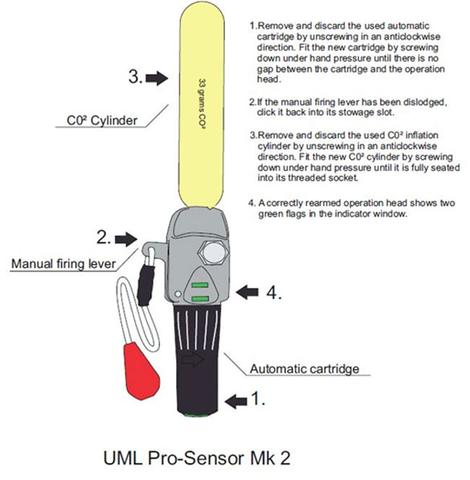
Most life jacket auto inflators use a screw-on pressure cylinder and auto cartridge and activates when it comes into contact with water.
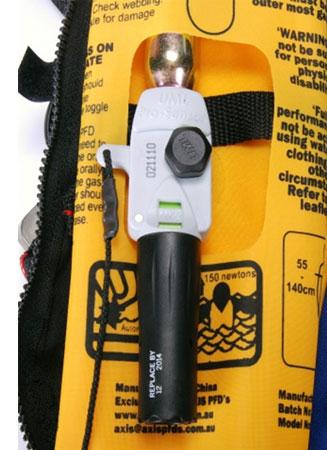
The cartridge mechanism comprises a compressed high-powered spring which is tensioned by a paper element. When this element comes into contact with water it deforms and releases the spring and the force pushes a plunger and cutter into the CO² pressure cylinder.
Escaping gas travels through the inflator head and inflates the life jacket.
Total buoyancy is normally reached in 4-5 seconds.
When the system has fired automatically the indicator system turns to red, showing the cartridge has activated and the CO² cylinder has been pierced.
The Automatic system is backed up by a manual override, which allows the user to pull the toggle and inflate the lifejacket.
Important note: Wearing particularly bulky buoyant or foul weather clothing may cause the automatic cartridge not to activate as sea water has failed to reach the release mechanism. In such cases the manual back-up (pull toggle) should be used to inflate the jacket.
Automatic Operation
The jacket inflates automatically on contact with water. A backup oral tube inflator is a standard component if the CO2 inflation system fails. Most inflatable life jackets use various forms of this type of moisture sensitive operating head. Beware however; the jacket can be inadvertently inflated in wet conditions including heavy humidity, rain, splashes or from the heavy spray of water while on deck. A jacket with this type of inflation mechanism is best suited to power boating, coastal sailing and racing when there is some protection from the elements.
How the Manual Inflator Works
The manual inflation mechanism activates when the pull toggle is pulled by the wearer. The toggle is connected to a lever which pushes a plunger and cutter into the CO² pressure cylinder. Escaping gas travels through the inflator head and inflates the life jacket. Total buoyancy is normally reached in 4-5 seconds.
When the system has activated, the indicator system turns to red, showing the CO² cylinder has been pierced.
The indication system will only show green when the inflation mechanism has been correctly rearmed and ready for use.
Manual Operation
Inflation of the jacket is by pulling the manual inflation tag which activates a pressurised CO2 cylinder. A backup oral tube inflator is a standard component if the CO2 inflation system fails. A manual inflation system will NOT deploy if the wearer is unconscious or unable to pull the inflation tag.
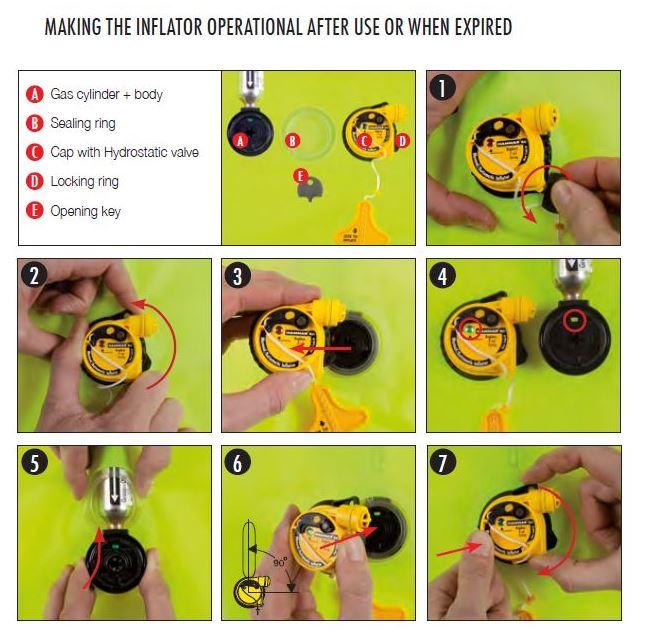
Making the moisture sensitive inflator unit operational after use or when expired (UML or Halkey Roberts devices)
How the Hydrostatic Automatic Inflator Works
When the inflation unit is immersed more than 100mm in water, a hydrostatic valve opens and allows a sensing element to release a tensioned stainless-steel spring. This action drives a needle into the CO² pressure cylinder. Escaping gas travels through the inflator head and inflates the life jacket. Total buoyancy is normally reached in 4-5 seconds.
When the system has fired automatically the indicator system turns from green to red, showing the cartridge has activated and the CO² cylinder has been pierced.
The Automatic system is backed up by a manual override which allows the user to pull the toggle and inflate the lifejacket.
Important note: Wearing particularly bulky buoyant or foul weather clothing may cause the automatic cartridge not to activate as sea water has failed to reach the release mechanism. In such cases the manual back-up (pull toggle) should be used to inflate the jacket.
How the Manual Inflator Works
Inflators such as the Hammar® manually activates when the pull toggle is pulled. The toggle is connected to a lever which pushes a plunger and cutter into the CO² pressure cylinder. Escaping gas travels through the inflator head and inflates the lifejacket. Total buoyancy is normally reached in 4-5 seconds.
When the system has activated, the indicator system turns to red, showing the cartridge has activated and the CO² cylinder has been pierced.
The indication system will only show green when the inflation mechanism has been correctly rearmed and is ready for use.
Benefits of a Hydrostatic Life Jacket Inflator.
- Recognised as the most reliable automatic life jacket inflation mechanism available. A unique hydrostatic valve protects a water sensitive element from nuisance activation – therefore there is no inadvertent jacket activation in rain, spray, splashing and humidity.
- CO² gas cylinder is located inside the life jacket bladder where it is protected against corrosion. Snagging hazards and cylinder malfunctions are greatly reduced.
- Service / replacement of Inflator unit is not required for five years (although life jacket servicing is still recommended annually)
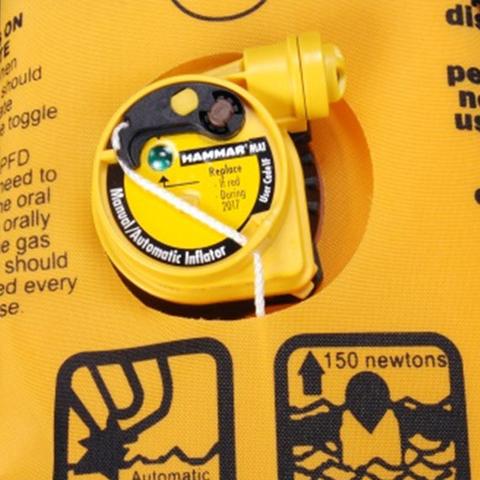
Hydrostatic Automatic Operation
Inflates the jacket automatically with a unique Hydrostatic valve that operates only by the change in pressure when the jacket is submersed in water. This system is NOT affected by splashed water, spray or humidity. Ideal for ocean yacht racing and cruising or when working in very wet conditions. Includes backup manual operation. Longer time (5 years) before replacement required. Single point indicator shows the jacket is ready for use. The gas cylinder is often located inside the lifejacket bladder, protected from corrosion and any snagging hazard. Ideally suited for ocean racing sailors and blue water cruising.