Life Jackets
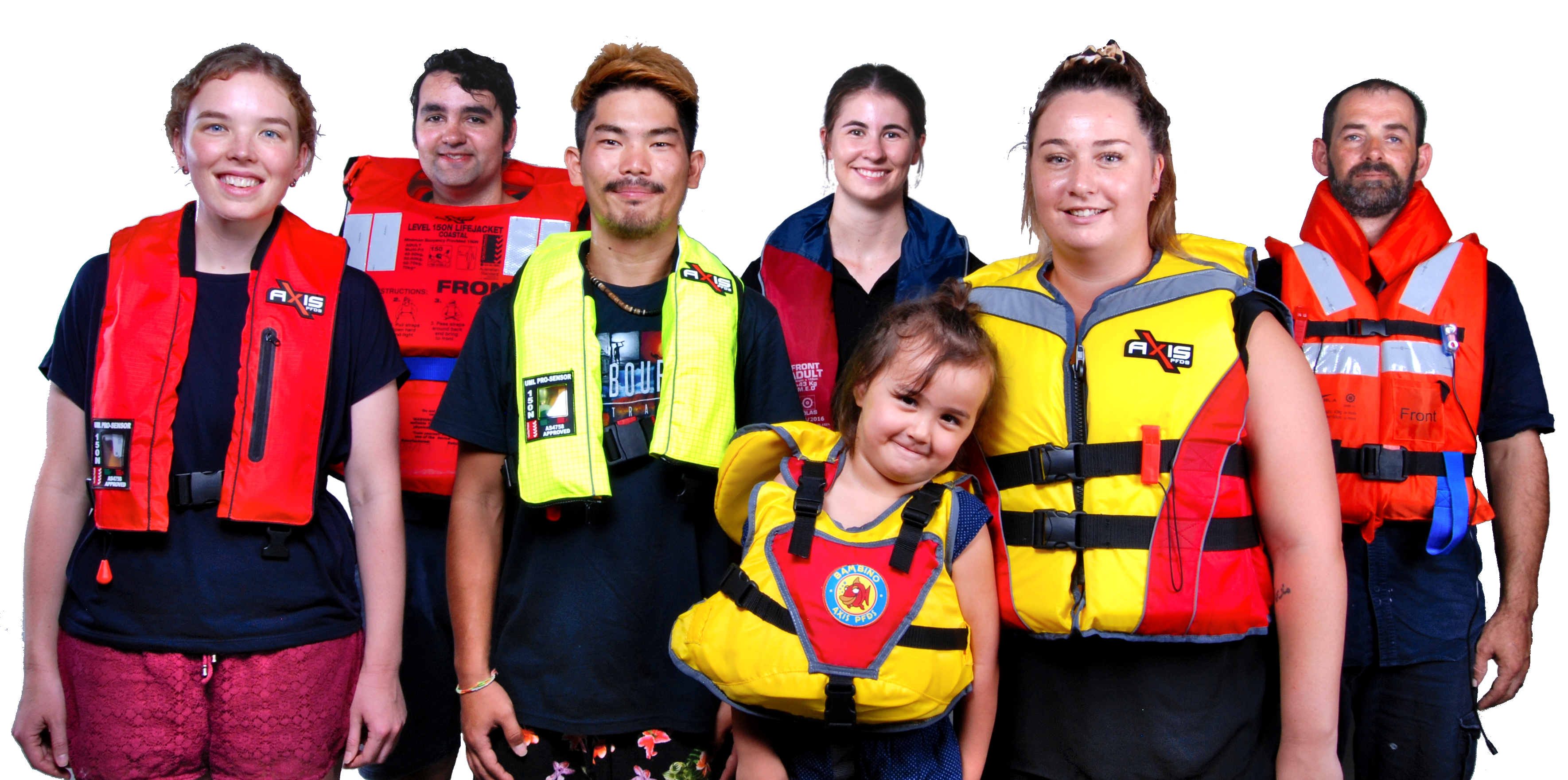
Great Circle’s range of life jackets and accessories meets the needs of all those who take to the water, whether on inland and coastal waterways or undertaking crossing oceans. Latest cutting edge design and selection of first class materials, approved to Australian or international standards ensures long term comfort and reliability while keeping you safe at sea.
History
Life Jacket History
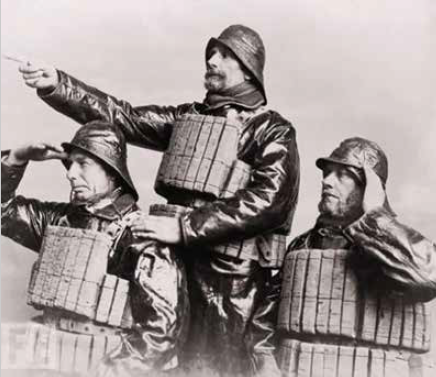
A buoyancy aid, personal flotation device (PFD) or more commonly simply referred to as a life-jacket, is designed to provide a human body with additional buoyancy so that it helps to keep the wearer’s nose and mouth clear of the water. Modern fabrics covering contoured closed cell plastic foam may have replaced cork and canvas models of a hundred years ago, but in reality lifejackets are still a simple device. Yet they remain so effective at saving lives, many countries require by law that they be carried on board. Recent name changes listing buoyancy ratings in Newtons (the decimal description of upwards force) has allowed more accurate categorising so that boaters can distinguish the effectiveness of one personal flotation type from another. In the headlong rush to find what are often complex high-tech methods to increase safety at sea it can be easy to overlook the humble life jacket.
Safety
Life Jacket Standards
Life jackets made to the new Australian Standard 4758/ NZ Standard 5823 are now widely available and were introduced to more closely align with international standards and to reflect advances in life jacket design and manufacture. Nevertheless jackets made to the old Australian standards can still to be sold and most will be recognised for many years to come. In most cases, boaters won't need to replace their older lifejackets as long as they are serviceable.
Life jackets made to AS 4758 are identified by the international Newton buoyancy rating as:
1
Level 150
2
Level 100
3
Level 50
4
Level 50s
Level 100, 150, 275 (401 NZ)
A level 150 or 100 life jacket provides full flotation support to the wearer and will hold the wearer’s face upwards in most cases should they be injured or unconscious. It is effective in rough water. Regulations require that the outer case or buoyancy bladder be coloured safety orange or bright yellow only and are fitted with strips of retro-reflective tape to aid visual contact. There are two types - fixed buoyancy and those which are self or manually inflatable. Many also incorporate battery-operated lights, whistles and safety harness attachment points. It can be worn for general boating in all waters.
Level 50 (402 NZ)
A level 50 lifejacket or buoyancy vest has less buoyancy than a 100 Newton life jacket and may not rotate the wearer to a "face up" floating position. But it should still provide sufficient buoyancy to keep the wearer’s mouth and nose above water, but only in sheltered waters. It is intended for use in active water-sports, where freedom of movement is beneficial, such as water-skiing, wind-surfing, canoeing, sailboarding etc. A lifejacket level 50 must be predominantly a safety colour - from the top of the shoulders to the bottom of the arm region they are safety orange or bright yellow.
Level 50s (403 NZ)
A life jacket level 50s provides the same amount of buoyancy as a lifejacket level 50, but is not limited to traditional high visibility colours. It is recommended for use in situations where the wearer risks short-term immersion in sheltered waters and is usually worn in active water sports such as water-skiing, jet-skiing and fishing.
Some wetsuits also carry Life Jacket Level 50s approval.
Compare
Choosing a Life Jacket Level 100,150, 275 (401 NZ)
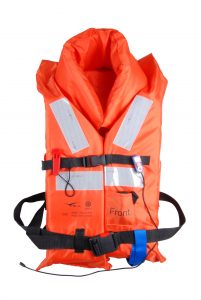
Fixed Buoyancy (foam) Type
Inflatable Type
Hi Tech Inflatable
Full Vest, Buckle/ Buckle Zip-up
Your safety is our business